For AI & LLM startups
Product & Website Design for AI & LLM Startups
Gestures Studio is a design agency for AI & LLM startups. We design the product interfaces where people ask, wait, review and correct model output, such as chat, agent runs, generation flows and usage screens, and the website that shows what your AI product does before anyone signs up.
An AI product is judged on its worst answer as much as its best one. We design the states around the model, including streaming, sources, errors, limits and human review, with your product, engineering and AI teams.
Selected work
AI product work: Nomicam and Venice
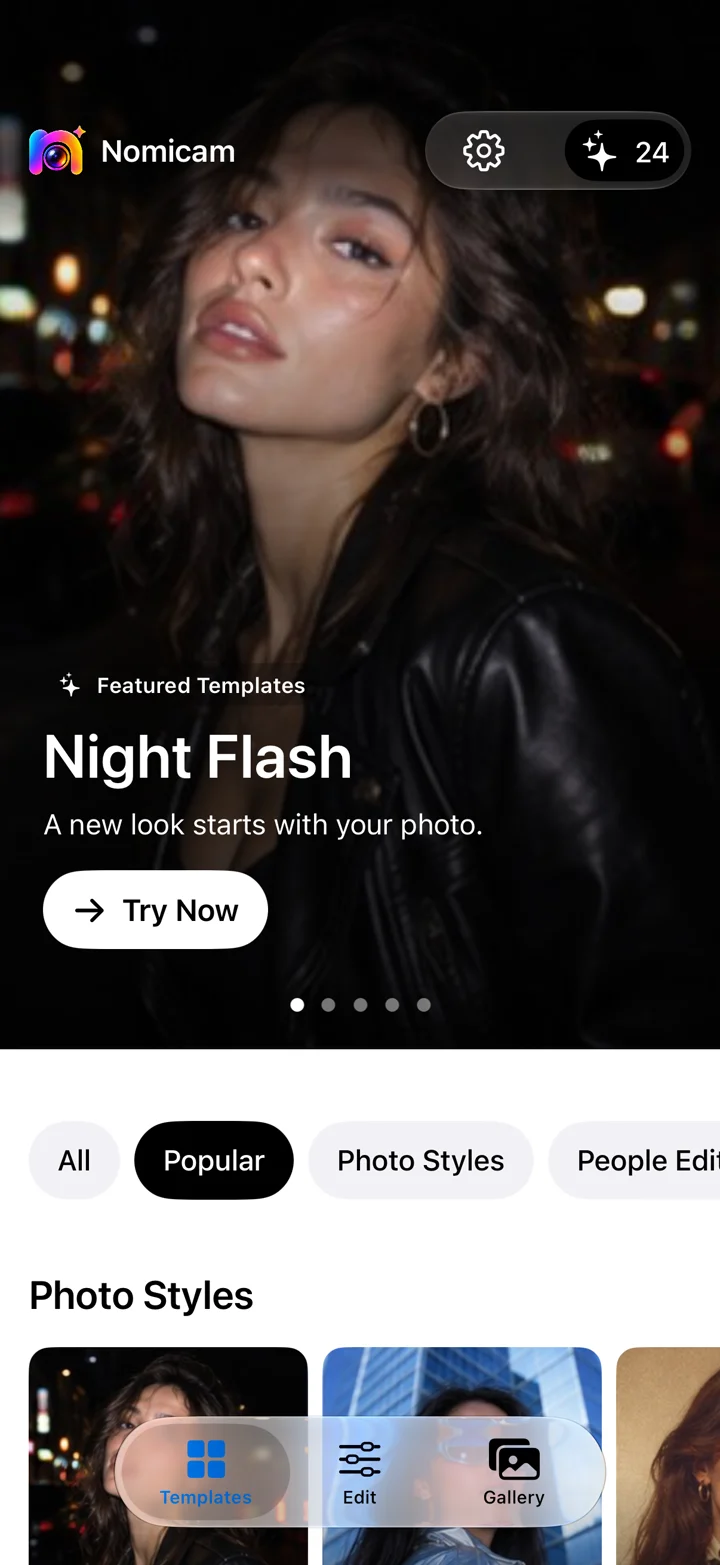
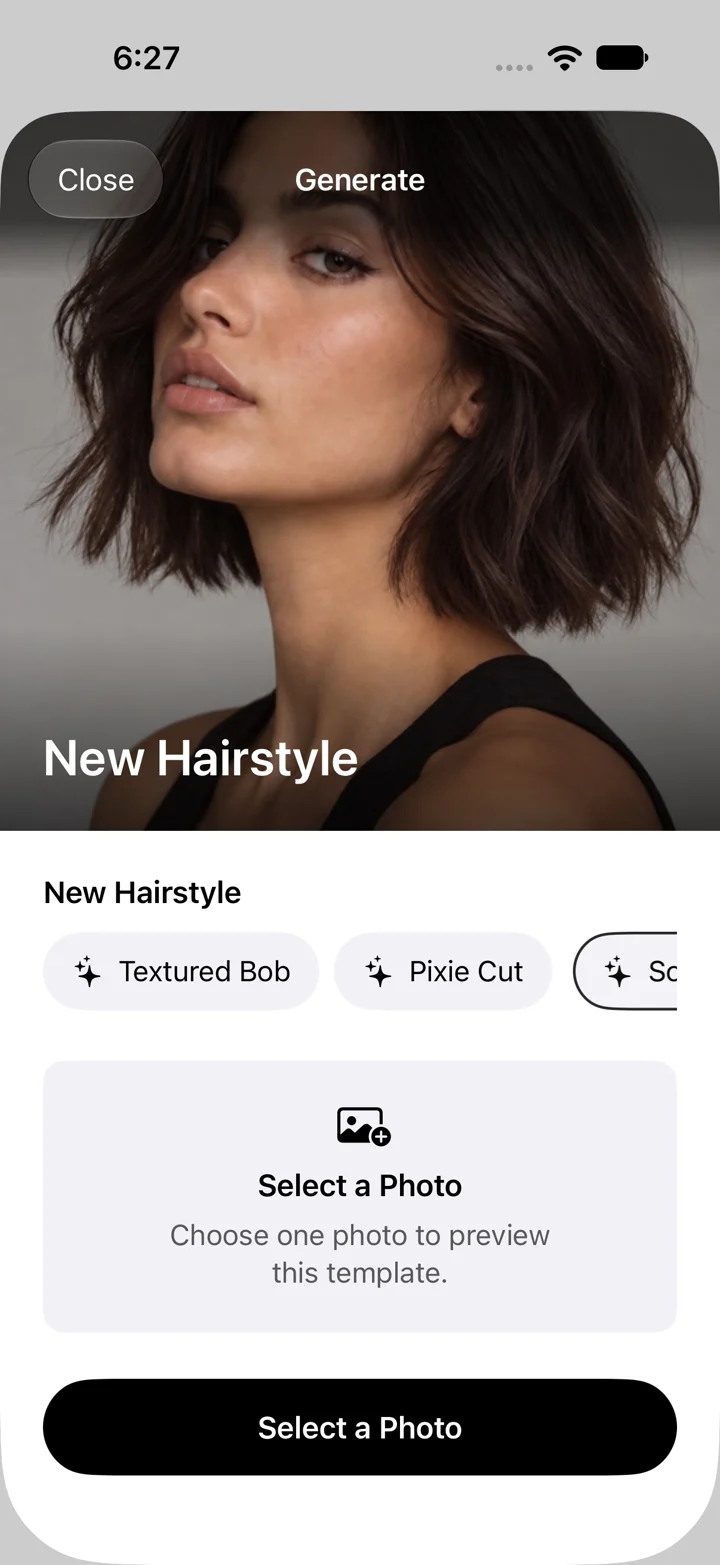
Nomicam is the AI photo editor Gestures designs and builds for iPhone. The central product decision in Nomicam is to replace prompts with templates: people choose a template such as Night Flash or New Hairstyle, add a photo and let the app handle the model behind it, with no model selection, complicated prompts or technical setup. Everyday adjustments use free, local filters and editing tools. Nomicam is coming to iPhone.
Ragip Diler, who leads Gestures, worked as Senior Product Designer at Venice, an independent design studio for AI and venture-backed companies. There he designed security, analytics and MCP workflows for AI products.
Typical screens
The AI and LLM product screens we design most
AI and LLM products share a set of screens that decide whether people trust the output enough to use it. Each screen needs its waiting, partial, wrong and failed states designed, because model output is never correct every time.
Trust is the core design problem. In the 2025 Stack Overflow Developer Survey, 46% of developers said they distrust the accuracy of AI tools while 33% said they trust it, and 66% named answers that are "almost right, but not quite" as their top frustration.
| Screen | What people need from it | What we design |
|---|---|---|
| First run and examples | Know what the product can do before typing anything | Example tasks, templates, starter prompts and empty states that show a real result |
| Prompt input and composer | Give the right context without writing an essay | Composer, file and context attachments, mode or tool pickers and structured inputs where free text is the wrong tool |
| Streaming and generation | See progress and stop a run that went wrong | Streaming text, progress for long generations, stop and retry controls and partial results |
| Answers with sources | Check where an answer came from | Inline citations, source panels, quoted passages and clear signals when no source supports a claim |
| Agent runs and tool calls | Follow what the agent is doing and approve risky steps | Step timelines, tool call details, approval requests, pause and resume and a final summary of what changed |
| Review, edit and feedback | Fix an almost-right result instead of starting again | Inline editing, regenerate and compare versions, accept or reject changes and feedback that reaches your team |
| Errors, limits and refusals | Understand why a request failed and what to do next | Messages for rate limits, unavailable models, blocked requests and long inputs, each with a next step |
| Data access and connectors | Control what the AI can read and change | Connector setup, permission scopes, workspace data controls and an activity log of AI actions |
| Usage, credits and billing | Predict the cost before running a large task | Credit or usage meters, cost previews, plan limits and upgrade paths that match your pricing model |

Product design
Product design for AI and LLM products
Start with one task where the model's output has to be useful, then design the full loop around it: the input, the wait, the result, the review and the correction. A chat box is one possible interface, not the default. Nomicam replaces a prompt with templates because people choosing a photo style should not need to write one.
An AI and LLM product design scope can include:
- The core task flow from input to an accepted result, with every waiting and failed state.
- Chat, copilot or agent interfaces, chosen by the task instead of by the trend.
- Source, citation and confidence patterns that let people check the output.
- Approval steps and activity logs for agents that act in other tools.
- Usage, credit and plan screens that make model cost predictable.
- A design system with accessible components for streaming, loading and review states.
Our AI-native product development service takes a first version from a focused prototype to a working product, and our product design service covers existing products. Before a release, our checklist for evaluating an AI-assisted app prototype tests the full journey and its failures, and our guide to onboarding around the first useful action applies directly to the first run of an AI product.
Website design
An AI startup website that shows the product working
An AI startup website has to show the product doing one real task, because every AI company now claims to save time. Visitors compare you with general-purpose assistants, so the site needs to answer what your product does that a chat assistant does not, who it is for, how it handles their data and what it costs.
We organize the site around those answers and give each page one job. The design scope can cover the homepage, product and use-case pages, an interactive or recorded product demo, integration pages, a pricing page that explains credits or usage, a security and data page and the waitlist, trial or demo entry points.
Your team owns the claims about model quality, benchmarks and data handling, and we design how they read and where they appear. Our guides on SaaS website structure and homepage clarity show how we approach this work. Explore our website design service, or Framer website design for a site your team can update after launch.

Responsibilities
Who owns what in an AI product project
AI product design works when responsibilities are clear from the start. Gestures designs how people use and judge the model's output, and your team owns the model, its behavior and the claims you make about it.
| Area | Gestures | Your team |
|---|---|---|
| Model behavior | How output, sources, uncertainty and errors appear in the interface | Model choice, prompts, retrieval, evaluation and quality thresholds |
| AI disclosure | Clear labels for AI-generated content and AI conversations | Legal requirements, such as Article 50 of the EU AI Act, which requires telling people when they interact with an AI system |
| Data and privacy | Data controls, connector permissions and readable privacy explanations | Data retention, model training policy and the privacy commitments behind them |
| Safety and content policy | Refusal, warning and reporting flows | The policy, moderation rules and their enforcement |
| Agent actions | Approval steps, activity logs and undo where the product allows it | Which actions an agent may take and the system permissions behind them |
| Engineering handoff | Annotated designs, prototypes and documented states | Implementation, latency, cost control and release |
We use sample or synthetic data in design files and prototypes. Real customer prompts and outputs stay in your systems.
Working together
Choose a focused sprint or an ongoing partnership
Monthly partnership
$7,500$10,500USD / month
Studio $7,500 + Growth $3,000 / month
For a larger product or website effort that continues across model and feature releases. Set the current focus and review what should receive attention next.
Strategy · Design · Review
Work starts within 1 day of payment.
Cancel anytime.
Start your projectWeekly sprint
$2,250$4,000USD / week / 2 weeks
+ $3,000 / month for Growth
For one flow, such as the first run, an agent approval step or the pricing page. Agree the deliverables and dependencies before starting. The weekly rate describes the engagement period; completion timing depends on the scope.
Save $500 with two weeks: $4,000 instead of $4,500.
Strategy · Design · Review
Work starts within 1 day of payment.
Cancel anytime.
Start your projectAdd Growth to a studio plan
SEO, content strategy and content production, alongside your design team. Growth is billed monthly. Cancel anytime.
+$3,000 / month
A weekly sprint suits one flow, such as the first run, an agent approval step or the pricing page. A monthly partnership suits a larger product or website effort that continues across model and feature releases.
Every engagement covers strategy, design and review. The deliverables, reviewers and engineering handoff are agreed before work starts.
Compare all plans or book a call to discuss the first scope.
Questions
Questions from AI and LLM startups
Do you have AI product experience?
Yes. Gestures designs and builds Nomicam, an AI photo editor for iPhone, and Ragip Diler, who leads Gestures, designed security, analytics and MCP workflows for AI products as Senior Product Designer at Venice, a design studio for AI and venture-backed companies.
Should our AI product use a chat interface?
Only when the task is open-ended. Chat suits questions and exploration, while repeated tasks usually work better with templates, forms or buttons that carry the context for the user. Nomicam uses templates instead of prompts for exactly this reason.
How do you design for wrong or uncertain answers?
We design the review loop as carefully as the answer. That means sources people can check, editing instead of starting over, clear limits, a retry path and feedback your team can read. Your team sets the quality thresholds, and the interface shows people what to check.
Can you design agent interfaces?
Yes. We design step timelines, tool call details, approval requests and activity logs, so people can follow an agent's work and stop it before a risky action. Your team decides which actions an agent may take.
Do you write prompts or choose models?
Your team owns model choice, production prompts and evaluation. In a prototype, we can connect a model to test the core interaction, as agreed in the scope.
Can you build the product or website too?
Yes, within an agreed scope. We build websites in Framer or Webflow and develop mobile apps and AI products through our AI-native workflow. Integrations, testing, release and security review responsibilities are agreed for each project.
How much does an AI product design engagement cost?
Work with Gestures costs $7,500 per month for a monthly partnership or $2,250 per week for a weekly sprint. See pricing for every plan.
A conversation
Tell us which AI flow needs attention
Share your product or website, the task your model performs and the step where people hesitate or drop off. We can discuss the first scope and whether Gestures is the right fit.
Prefer email? Email us, or use the contact page.