Website Design
SaaS Website Redesign Cost: Compare Scope Before Quotes
SaaS website redesigns typically cost $10,000 to $100,000 with a studio or agency. Budget ranges by scope, a design-only versus design-and-build matrix and a full-budget worksheet.

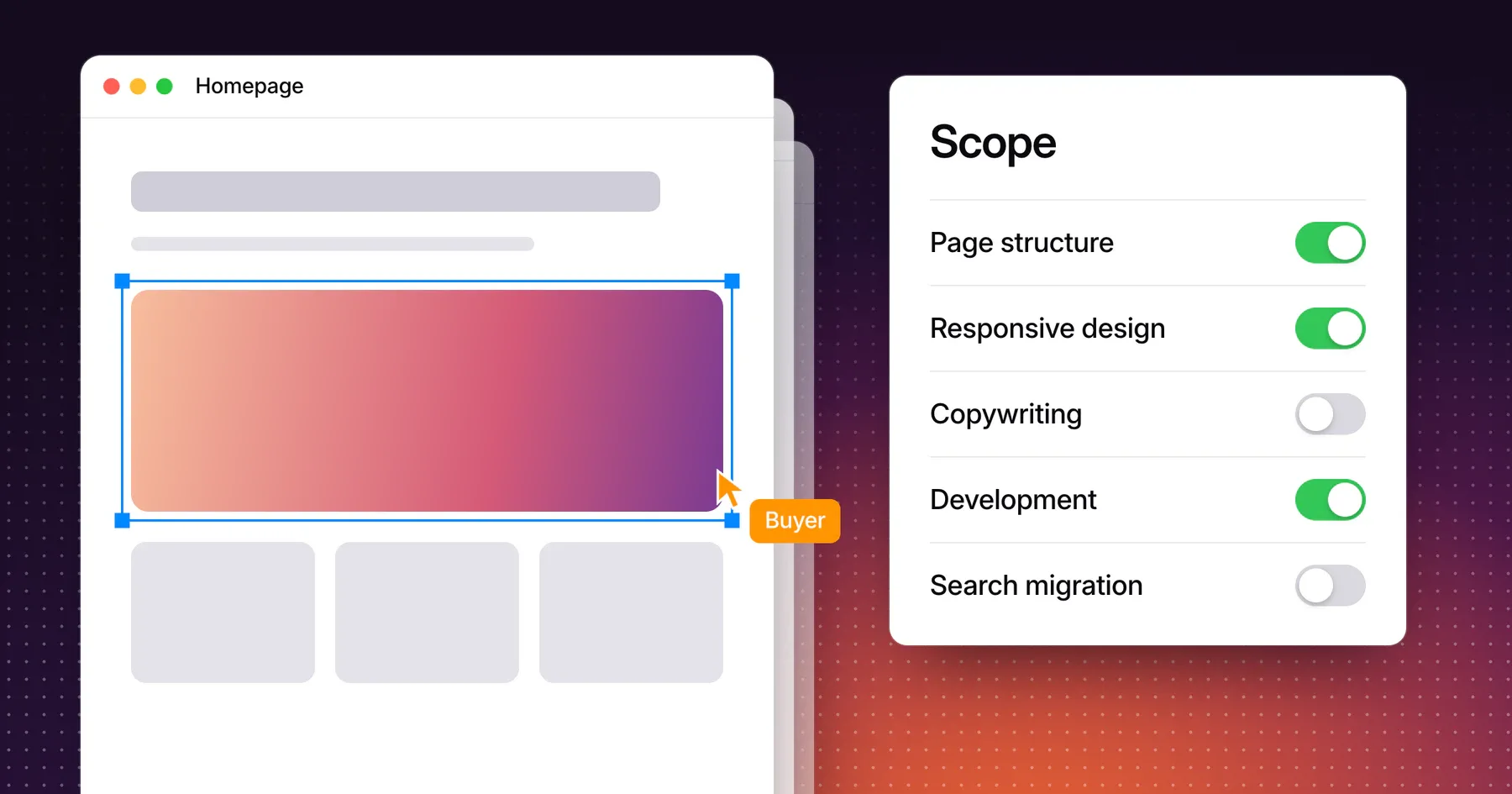
A SaaS marketing website redesign typically costs $10,000 to $100,000 with a studio or agency. A smaller site that keeps its core messaging and CMS usually falls between $10,000 and $30,000. A growth-stage site with a new visual system and a broader page set usually falls between $30,000 and $100,000. Enterprise programs with migration, localization and governance run from $100,000 to $300,000 or more, according to the planning ranges Webstacks published in October 2026.
Independent data points in the same direction. Clutch reports an average web design project of $38,105 and a common US agency rate of $100 to $149 per hour, while noting that most reviewed projects cost under $10,000 and a few large projects raise the average. The number of unique templates, the content work, the build and the migration move a project within these bands.
This guide is for founders and marketing leaders comparing proposals for a SaaS marketing website. It includes a scope matrix and a budget worksheet. Product application redesigns need their own interface and workflow scope.
Separate a visual refresh from a structural redesign
A visual refresh usually sits at the low end of the range because strategy, sitemap and copy stay in place. A structural redesign usually moves a project above $30,000 because those decisions become part of the work.
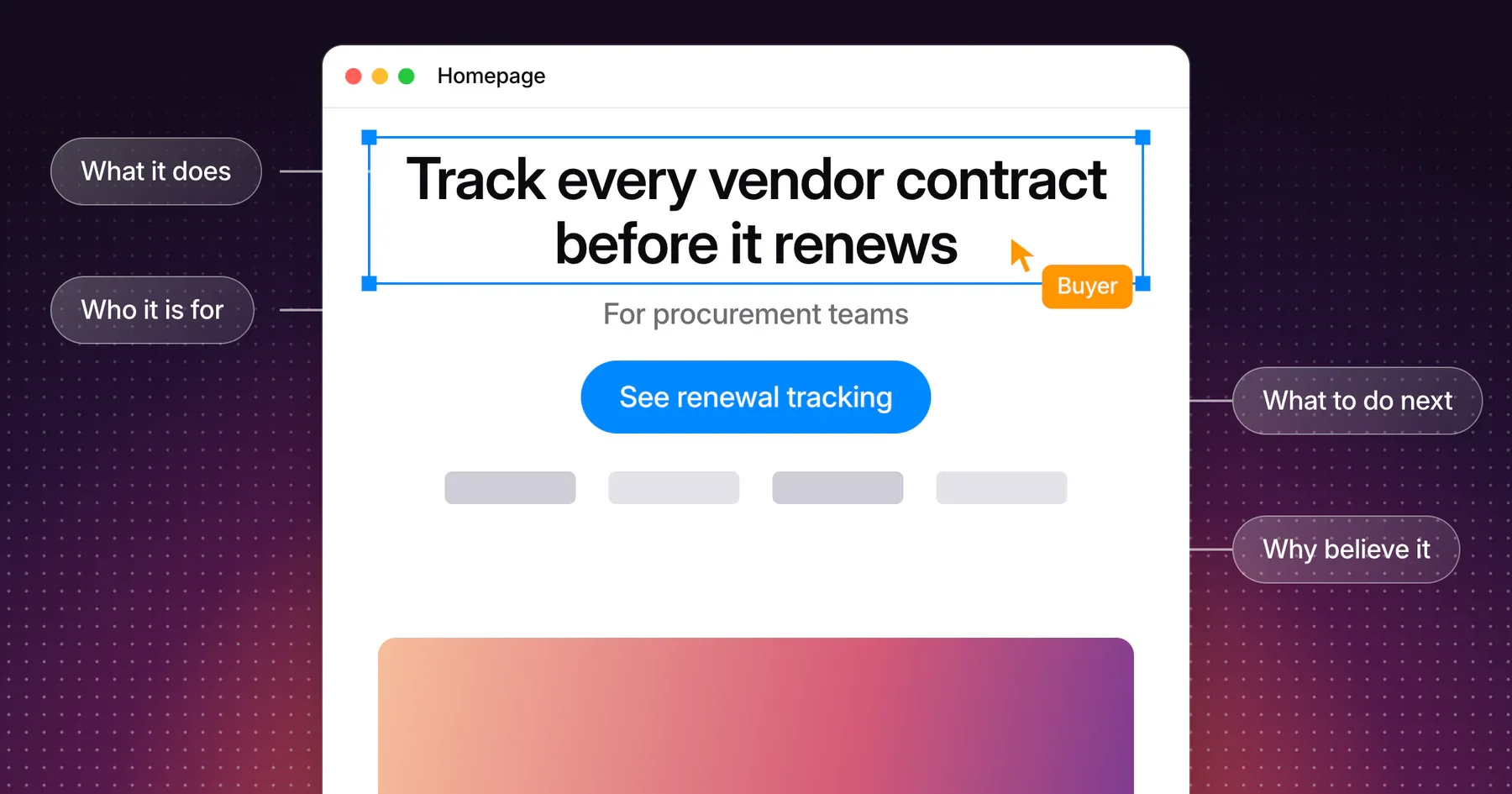
A visual refresh can preserve the site’s main pages and messaging while changing how they look and behave. A structural redesign may revisit what the site explains, how pages relate and how visitors reach the next step.
The distinction matters because “redesign the homepage” can describe either task. One team may be asked to apply an established direction to approved copy. Another may need to help determine the audience, rewrite the product story and reconsider navigation before a layout can be agreed.
| Starting situation | Typical external budget | Scope to clarify | What the quote needs to explain |
|---|---|---|---|
| Current message and page structure remain useful | $10,000 to $30,000 | Visual direction, responsive layouts and selected interactions | Which layouts, states and assets are being updated |
| The product or audience has changed | $30,000 to $100,000 | Page purpose, navigation and content requirements | Who makes the structural and messaging decisions |
| Marketing cannot maintain the site effectively | Up to $35,000 | Publishing tasks, CMS configuration and training needs | Which editing controls and implementation work are included |
| Pages look complete but important actions fail | $35,000 to $75,000 or more | Forms, integrations, error states and testing | Who will deliver and verify the complete visitor journey |
The first two ranges follow Webstacks. The last two follow the custom and complex project budgets from Branded Agency, which exclude platform subscriptions, domains, maintenance, licenses and taxes. A project can involve more than one situation, and the higher band usually sets the budget.
If those decisions are still unclear, use the website redesign brief template to describe the project before requesting comparable estimates.
Count unique templates and content responsibilities
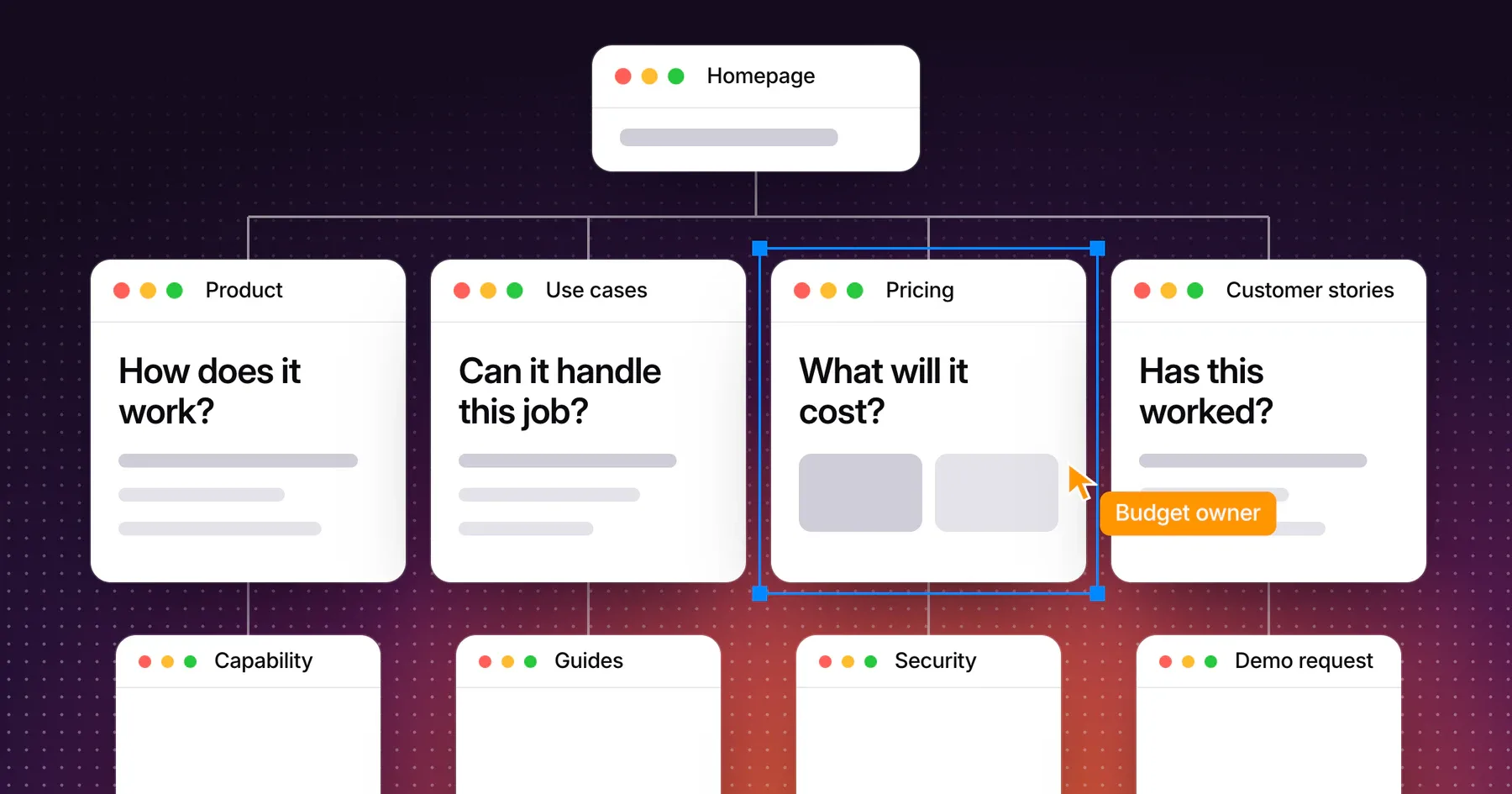
Unique templates and content work drive cost more directly than URL count. Branded Agency shows the scale in two hypothetical Webflow projects: about 8 pages with one blog collection totals $7,000, and about 25 pages with limited CMS migration and one CRM connection totals $23,500. Record the total URLs and the unique templates separately.
For example, three use-case pages might share one layout. Each page still needs accurate content, imagery, population and review. A single interactive product page may require several distinct behaviors even though it has only one URL.
Build a small scope inventory
| Page group | Example URL count | Example unique templates | Additional work to identify |
|---|---|---|---|
| Homepage | 1 | 1 | Product explanation, visual direction and responsive behavior |
| Use cases | 3 | 1 shared | Distinct copy, imagery and review for each use case |
| Pricing | 1 | 1 | Approved commercial information and comparison behavior |
| Demo request | 1 | 1 | Form destination, validation and confirmation |
| Resources | Existing inventory | Listing and article templates | Content mapping, migration and review of existing URLs |
This inventory is illustrative. It is not a recommended site size or a Gestures package. Ask how repeated templates and additional content entries are handled in each proposal.
Decide who supplies the content
Separate product facts, page copy, screenshots, illustrations and customer evidence. For each, record whether it is ready, needs revision or must be created, then name the producer and approver.
“Content supplied by the client” needs a practical definition. Does it mean approved text ready for layout, rough notes that need editing or access to someone who can explain the product? Those inputs create different responsibilities.
Likewise, a placeholder screenshot is not a finished asset. Product imagery may need capture, cleanup, composition and approval. Confirm whether that production work is included before comparing the design totals.
Account for development, migration and ongoing costs
Implementation can be more than half of a design-and-build fee. In the $23,500 example from Branded Agency, Webflow development, CMS work, CRM connection, launch testing and the redirect list add up to $12,500. After launch, Lean Labs estimates maintenance at $3,600 to $50,000 per year.
A proposal should make clear what your team will receive and who will take it to the next stage.
Design deliverables might include editable files, responsive layouts, reusable elements and interaction notes. A build scope needs to identify the implemented pages, publishing setup and behavior being delivered. Neither label is detailed enough on its own.
Development and CMS
Ask which platform the estimate assumes, what your team will be able to edit and which parts require developer involvement. Clarify who will create content models, populate entries, connect forms and configure integrations.
If a proposal includes “CMS setup,” ask what that covers. A configured collection, migration of existing content and training for the publishing team are distinct outputs. Include only what the project actually requires, with a named owner for the rest.
Search migration and launch
Record whether existing URLs stay, change, merge or retire. If URLs change, include the mapping and implementation of relevant redirects, updates to internal links and checks on canonical URLs and indexability.
Google’s guidance on site moves recommends planning URL mappings and redirects, then monitoring the move. Ask who owns those tasks instead of treating “SEO included” as a complete description.
Launch also needs an owner. Identify who checks the form destination, success and failure behavior, analytics events, important links and the removal of staging restrictions. Clarify who can resolve an issue discovered immediately after release.
Recurring and third-party costs
List hosting, CMS subscriptions, paid plugins, fonts, asset licenses and other services separately when applicable. Check who holds each account, who pays renewals and what happens when the engagement ends.
Maintenance and ongoing content work should also have clear boundaries. Distinguish a defined period for resolving delivery issues from an ongoing agreement to make new changes.
Compare quotes against the same scope
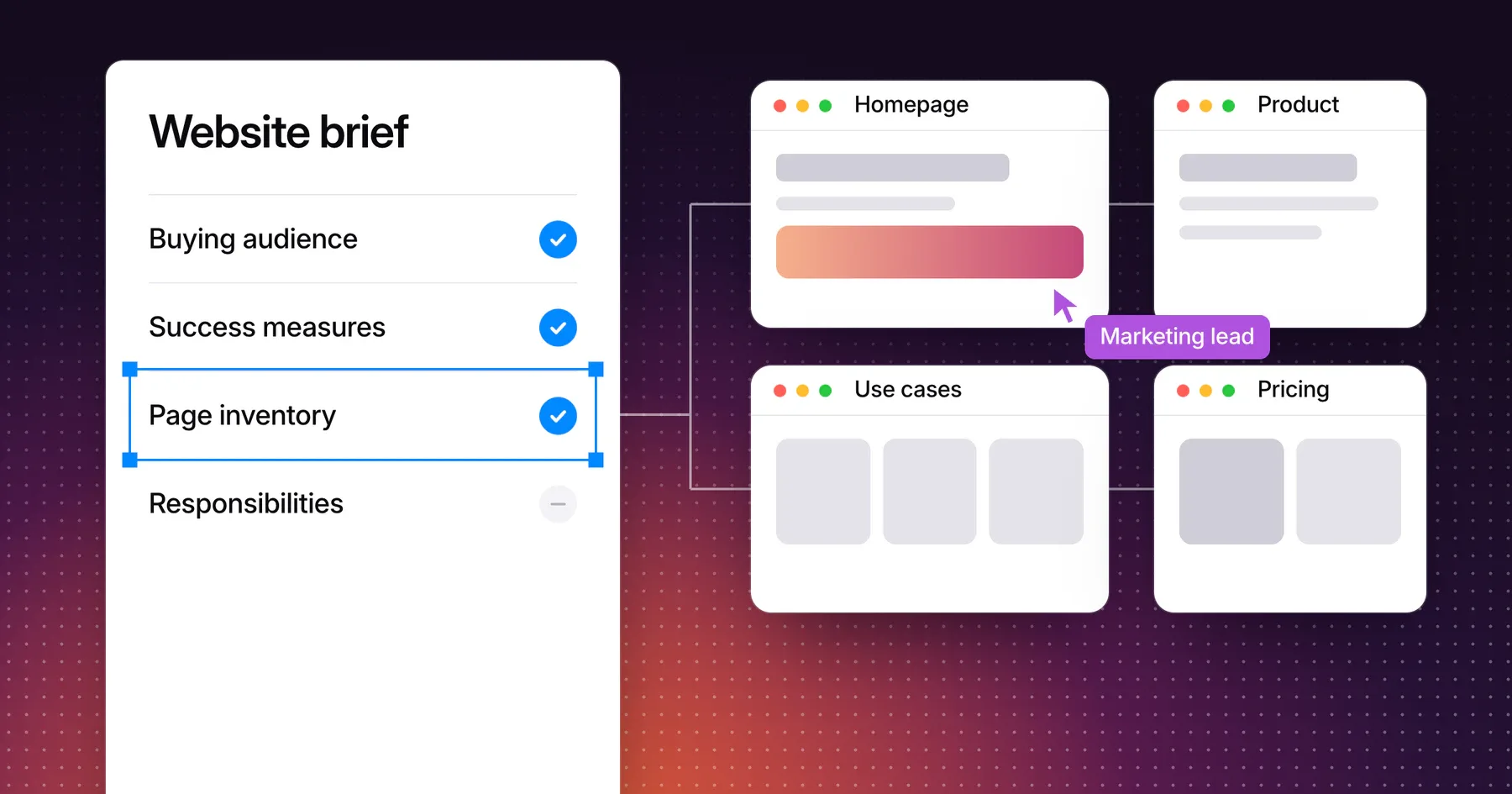
Two quotes are comparable only when they cover the same responsibilities. Line them up against one brief before comparing totals.
Consider a fictional team with approved product positioning, an existing brand identity, a homepage, three use-case pages, pricing, a demo page and a resource library. The team needs responsive designs and a live website, but has not yet decided who will build it.
The following matrix compares two possible delivery arrangements for that same brief. It is an editorial example, not a comparison of real providers or a statement of Gestures’ standard inclusions.
| Responsibility | Design-only proposal | Design-and-build proposal | What the buyer should confirm |
|---|---|---|---|
| Structure and page purpose | Included if specified | Included if specified | Which decisions and review outputs are covered? |
| Copywriting | Internal writer or separate scope | Internal writer or separate scope unless included | Is approved copy an input or a deliverable? |
| Responsive design | Agreed layouts and behavior specifications | Agreed layouts plus their implementation | Which templates and states are covered? |
| Product imagery | Supplied assets or separately defined production | Supplied assets or separately defined production | Who creates and approves the final assets? |
| Development | Internal engineers or a separate provider | Delivery provider, within the agreed scope | What is implemented and on which platform? |
| CMS and content population | Separate implementation responsibility | Only the specified setup and population | How many entries and which editing controls? |
| Forms and integrations | Design/specification as agreed; implementation elsewhere | Specified integrations implemented as agreed | What destination and failure behavior are tested? |
| Migration and redirects | Separate owner unless explicitly included | Included only where explicitly specified | Who maps, implements and checks changed URLs? |
| Launch checks | Design review if agreed | Agreed implementation checks and release responsibility | Who approves release and handles blockers? |
| Support | Agreed handoff questions, if included | Agreed delivery support, if included | What is covered, for how long and through which route? |
A design-only proposal may fit a team with available engineering capacity and an established publishing setup. A design-and-build proposal may fit a team that needs a provider to own more of the delivery. Either can work when the responsibilities match the team’s needs.
Compare the money and capacity still required outside each proposal. If engineering is internal, record its availability and effort rather than assuming that work has no cost. Keep internal effort visible separately from external cash payments so it is not counted twice.
Use a full-budget worksheet
Your full budget equals provider fees, other external delivery, launch purchases and recurring costs over the same period. Internal team time sits beside that cash total.
Use the same categories for every candidate. For each line, mark included, separately quoted, internal responsibility, not needed or unresolved. An unresolved line should not be entered as zero.
| Budget line | What to record |
|---|---|
| Provider fee | Fee basis, covered scope and billing period |
| Additional external delivery | Copy, build, migration or other required work outside that fee |
| Internal effort | Named team, estimated effort and availability; track separately from cash fees |
| Launch purchases | Required assets, licenses or setup charges not already included |
| Recurring costs | Hosting, CMS and other services over a stated comparison period |
| Change allowance | A budget decision based on identified uncertainties, not an unexplained percentage |
| Tax and payment basis | Confirm currency, tax treatment and payment charges for the actual quote |
| Open items | Unpriced requirements and the person responsible for resolving them |
For a cash-budget comparison, add provider fees, additional external delivery, launch purchases and recurring charges over the same period, plus any explicitly approved allowance. Check that the categories do not overlap. Keep internal effort beside the cash total; include it in a broader economic-cost view only if your team has a consistent way to value it.
Recurring costs must use the same comparison window. A proposal showing a monthly subscription and another showing an annual total are not ready to compare until you align the period and confirm the billing terms.
Ask how the fee model handles change
A fixed project quote needs defined deliverables, assumptions and a change process. A weekly or monthly engagement needs clear priorities, billing rules and a practical way to judge progress.
For either model, ask what happens when copy arrives late, an integration proves more complex or the team changes the page inventory. Identify how the provider will communicate the effect on scope, cost and timing before proceeding.
A recurring rate tells you the price of a billing period. It does not establish the number of periods your project needs. Request an initial scope assessment and discuss which inputs or decisions could change it.
How Gestures’ studio plans relate to a website budget
As of November 6, 2026, Gestures lists $7,500 per month for ongoing, multi-month work and $2,250 per week for a focused feature or website engagement. At those rates, a two-week sprint is $4,000 and three months is $22,500. See the current studio plans for the published terms.
These rates describe engagement options. They are not a fixed total for a completed SaaS website redesign. The required pages, content inputs, development responsibilities, review needs and delivery boundaries still need to be agreed for your project.
When discussing your budget, identify whether you need website design, implementation or a wider content and launch scope. Do not assume that a plan rate covers every workstream in the comparison matrix, or that a website will be completed within one billing period.
Check these questions before accepting a quote
- Are all providers estimating the same templates, content entries and visitor actions?
- Which decisions must be made before design or development can begin?
- Who supplies and approves copy, product imagery and commercial claims?
- What exactly will be delivered: files, a build, CMS controls, content population or a combination?
- Who owns migration, integrations, release checks and post-launch questions?
- Which required items remain outside the fee or are still unpriced?
- What inputs and approvals does the estimate depend on?
- How will a scope change affect billing and timing?
Ask for a revised comparison where the answers differ. A lower quote may reflect a narrower responsibility; a broader one may include work your team already owns. The useful comparison is the scope you need and the total resources required to deliver it.
Frequently asked questions
How much should we budget for a SaaS website redesign?
Budget $10,000 to $30,000 for a focused redesign of a smaller SaaS site and $30,000 to $100,000 for a growth-stage site with a new visual system and broader page set. Enterprise programs start around $100,000. Add copywriting, recurring services and internal time if the proposal excludes them. Lean Labs puts annual maintenance at $3,600 to $50,000.
Is a design-only proposal cheaper than design and development?
The first invoice is usually lower, because a design-only proposal leaves implementation with your engineers or another provider. The project is only cheaper overall if that build capacity already exists. In one published $23,500 example, implementation and launch work account for $12,500.
Does a larger page count always mean a more expensive redesign?
Usually yes, but unique templates matter more. Pages sharing a template cost less to design and build, although each still needs content and review. A single interactive product page can cost more than several simple pages.
Can AI-assisted development reduce the budget?
Yes, mainly on repeatable build work such as page assembly and component variations. Content decisions, integrations, migration and acceptance testing still need people and time. Ask which parts use AI tools and how the delivered site is reviewed.
Should SEO and ongoing content be included in the redesign fee?
Include launch-critical SEO in the redesign fee: redirect mapping, metadata, canonical URLs and indexability checks. Budget ongoing content production and search improvement separately, because they continue after the site is live.
Discuss the scope behind your website budget
Bring your current site, the pages that need attention and the responsibilities your team can already cover. Explore Gestures’ website design scope, then discuss the work and open decisions behind your estimate.
Working through a decision like this?
Bring your current product or website and we can discuss what needs attention.
Keep reading